Published November 7, 2025
Navigating HOAs in North Carolina: The Pros and Cons You Need to Know

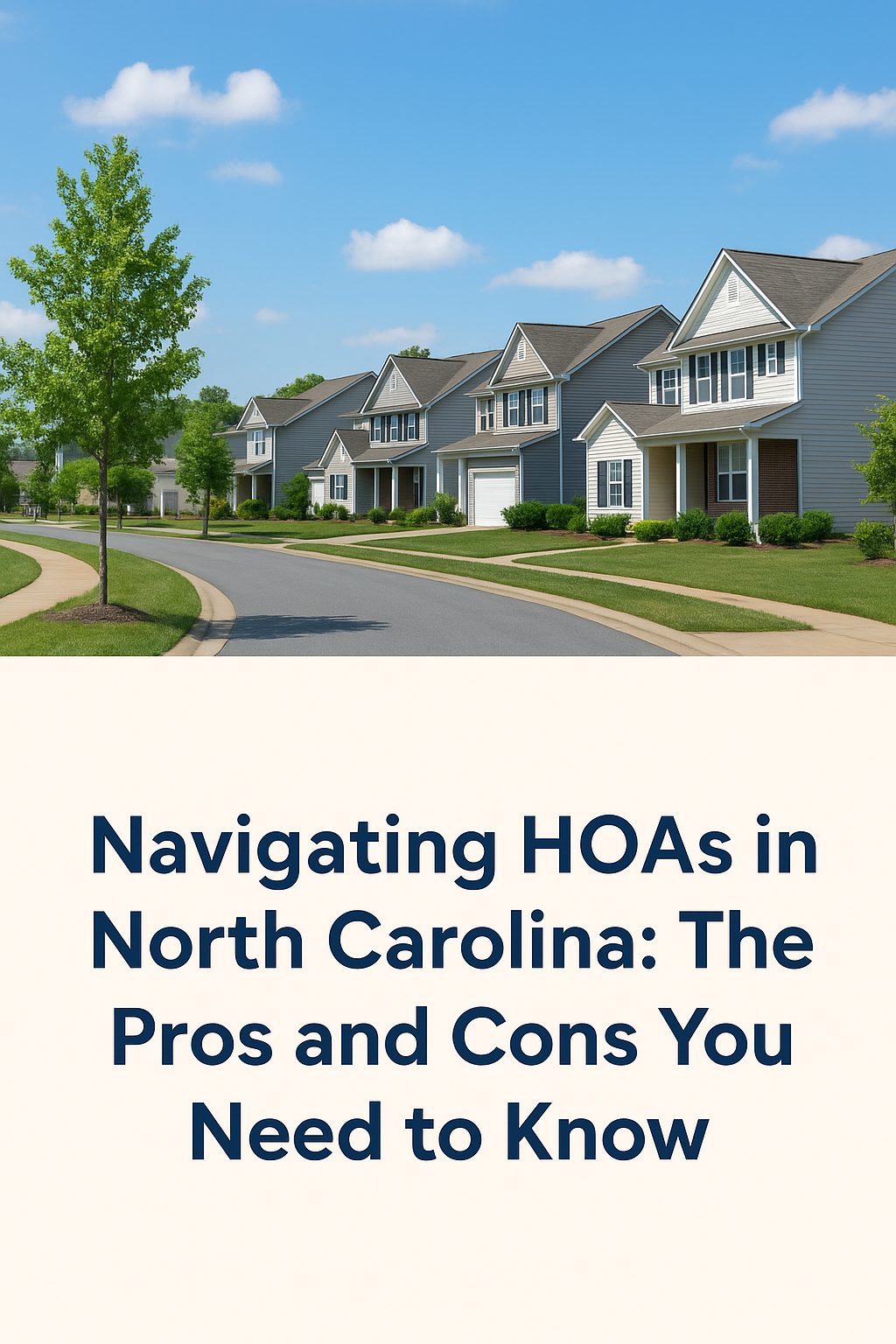
Picture this: a neighborhood with perfectly trimmed lawns, tree-lined streets, and a sparkling community pool where everyone knows each other’s names. Sounds dreamy, right? That’s the charm of many North Carolina neighborhoods with a homeowners’ association — better known as an HOA.
But before you fall in love with that picture-perfect community, it’s important to understand what living in an HOA really means — the perks and the possible headaches. Let’s break it down together!
So, What Exactly Is an HOA?
Homeowners’ associations (HOAs) are common across North Carolina — from Charlotte and Raleigh to smaller suburban neighborhoods.
An HOA is a group of homeowners who work together to manage and maintain shared spaces like community entrances, parks, and pools. They also help uphold neighborhood standards through a set of rules called Covenants, Conditions, and Restrictions (CCRs).
Think of CCRs as the community’s “house rules.” They’re there to keep everything consistent and looking its best — but they can also feel restrictive if you like to do your own thing.
If you want to dive deeper into the legal side, check out the North Carolina Homeowners Association Act, which outlines how HOAs operate in our state.
The Upside: Why People Love Living in an HOA
Here are a few of the biggest reasons homeowners choose to live in HOA communities in North Carolina:
🏡 1. Great Curb Appeal
One major perk of an HOA community is the consistent look. The lawns are manicured, the entrances are tidy, and the neighborhood feels well cared for. You don’t have to worry about your neighbor letting their grass grow knee-high or leaving an old sofa in the yard!
💧 2. Amenities Galore
Who doesn’t love having access to extras like a swimming pool, walking trails, fitness center, or clubhouse? HOAs often take care of these shared amenities, giving residents a sense of luxury and convenience right at home.
💰 3. Protecting Property Value
Because HOAs help keep things uniform and well-maintained, they can help protect — and sometimes even boost — your home’s resale value. That consistency appeals to future buyers too.
If you’re browsing HOA and non-HOA properties to compare prices, Zillow’s North Carolina listings are a great place to start.
🏘️ 4. Sense of Community
Many HOAs host social events, newsletters, or meetings, which can be a great way to connect with your neighbors. Some even have committees where residents can get involved and have a say in community decisions.
You can explore more about HOA engagement and leadership through the Community Associations Institute (CAI) - North Carolina Chapter — they offer tons of resources for both residents and board members.
⚖️ 5. Rule Enforcement
Let’s be honest — no one loves rules, but sometimes they’re necessary. HOAs help maintain peace by mediating disputes and enforcing guidelines fairly, so everyone enjoys the same quality of life.

The Downside: What to Watch Out For
Now, let’s talk about the not-so-fun side of HOA living. Every community is different, but here are a few common drawbacks to be aware of:
💸 1. Monthly or Annual Dues
HOA fees are the price you pay for all that maintenance and those nice amenities. Depending on the neighborhood, dues can range from very reasonable to quite pricey — and unpaid dues can even lead to penalties or liens.
🎨 2. Limited Freedom
Want to paint your front door bright red or put up a basketball hoop? Some HOAs might say “no.” CCRs can restrict things like paint colors, landscaping choices, or home additions. It’s all about maintaining a uniform look, but it can feel limiting.
👩⚖️ 3. Power of the HOA Board
The HOA board makes key decisions for the community. Ideally, they’re fair and transparent — but like any group, they can sometimes make choices that not everyone agrees with.
If you’re curious about how HOA boards are regulated, the North Carolina Real Estate Commission (NCREC) provides great information about HOA governance and your rights as a homeowner.
🧾 4. Special Assessments
Unexpected costs, like repairing a community pool or repaving private roads, can result in surprise fees for homeowners. It’s worth asking about the HOA’s financial reserves before buying.
🚫 5. Uneven Rule Enforcement
Sometimes rules aren’t enforced equally, which can cause tension. A good HOA keeps things fair and consistent for everyone.
So, Is an HOA Right for You?
If you love structure, amenities, and a well-kept neighborhood, an HOA might be a perfect fit. But if you value total freedom over your property, it could feel a bit restrictive.
Before buying in an HOA community, always review the CCRs and budget, and talk with your real estate agent (that’s where I come in!). I help my clients understand what’s expected — from monthly dues to community rules — so there are no surprises down the road.
You can also browse available HOA and non-HOA homes across North Carolina using Zillow’s NC Real Estate Search to compare lifestyle options.
Final Thoughts
HOA living isn’t one-size-fits-all. Some people love the structure, amenities, and peace of mind — while others prefer the independence of a non-HOA community. The key is finding the balance that fits your lifestyle.
If you’re searching for a home in North Carolina and wondering whether an HOA community is right for you, I’d love to help.
💬 Let’s chat about your goals and find the perfect match — whether that’s a home with all the HOA perks or one that gives you more flexibility.